

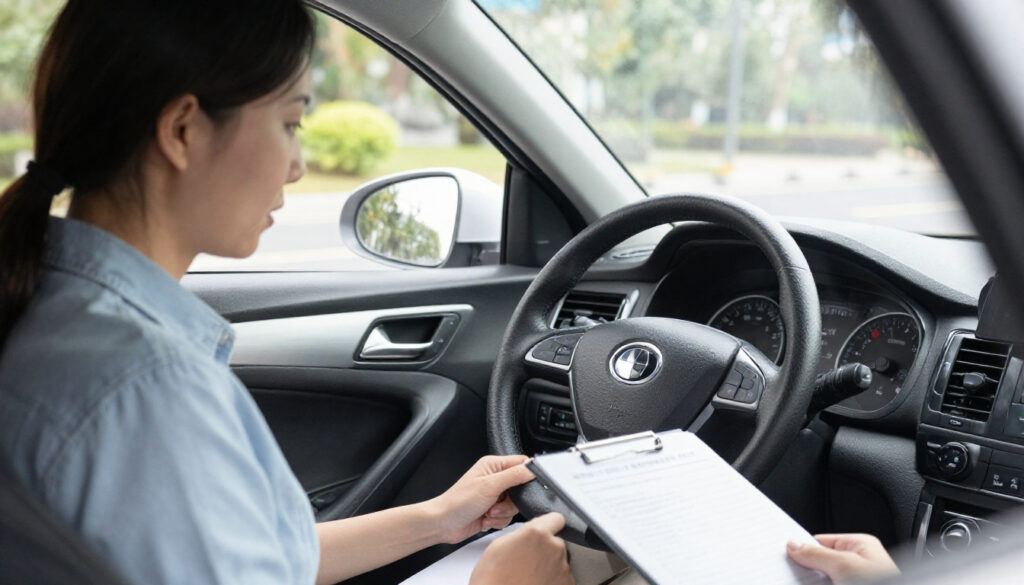
Taking a road test is one of the most important milestones for any beginner driver. While the experience can feel stressful, proper preparation, consistent practice, and understanding what examiners expect can greatly improve confidence and increase the chances of success.
Many learners focus only on basic vehicle control, but passing a driving test requires much more. Examiners assess observation skills, defensive driving habits, traffic awareness, decision-making, and the ability to operate a vehicle safely in real traffic conditions.
“Road tests can feel intimidating for beginner drivers, but proper preparation, defensive driving habits, and consistent practice greatly improve confidence and success.”
Organizations such as Manitoba Public Insurance and the Manitoba Driver’s Handbook emphasize safe driving practices, road sign recognition, observation techniques, and responsible driving behavior as key components of road test success.
Beginner Driving Test Preparation: What to Expect and How to Succeed
Understand What the Road Test Is Designed to Evaluate
A driving test is not designed to see whether a learner is a perfect driver. Instead, the examiner wants to determine whether the driver can operate a vehicle safely, responsibly, and independently.
During the test, examiners commonly evaluate:
- Observation and scanning habits
- Mirror and shoulder checks
- Speed control
- Lane positioning
- Traffic sign recognition
- Right-of-way judgment
- Defensive driving behavior
- Parking maneuvers
- Smooth steering and braking
- Confidence and decision-making
Understanding these expectations beforehand helps reduce anxiety and improves overall performance.
Observation Skills Are One of the Most Important Areas
Many beginner drivers fail road tests because of poor observation habits rather than poor vehicle control.
Drivers should consistently:
- Check mirrors regularly
- Perform shoulder checks before lane changes and turns
- Scan intersections left-center-right
- Watch for pedestrians and cyclists
- Look 12–15 seconds ahead
Defensive driving methods such as SEE (Search, Evaluate, Execute) and SIPDE (Scan, Identify, Predict, Decide, Execute) help learners recognize hazards early and respond safely.
The Manitoba Driver’s Handbook strongly recommends active scanning and hazard awareness as essential safe driving practices.
Know Road Signs and Traffic Rules Thoroughly
Understanding road sig ns and traffic laws is essential before taking a road test. Examiners expect learners to recognize signs quickly and respond appropriately.
Important areas include:
- Regulatory signs
- Warning signs
- Speed limits
- School and construction zones
- Right-of-way rules
- Traffic light procedures
- Stop and yield requirements
The Highway Traffic Act establishes many of the legal responsibilities drivers must follow while operating a vehicle.
Learners who understand traffic rules thoroughly are usually more confident and make safer decisions during the test.
Practice Common Driving Maneuvers Repeatedly
Road tests often include a variety of driving maneuvers that require both technical skill and proper observation.
Learners should practice:
- Left and right turns
- Lane changes
- Parallel parking
- Backing up safely
- Parking on hills
- Merging into traffic
- Controlled and uncontrolled intersections
- Boulevard and median turns
The goal is not perfection, but safe, smooth, and controlled execution.
Consistent practice in different traffic environments helps beginner drivers become more comfortable and confident behind the wheel.
Proper Speed Management Is Essential
Driving too fast or too slowly can both create unsafe traffic situations and result in driving test deductions.
Learners should:
- Follow posted speed limits
- Adjust speed for weather and traffic conditions
- Maintain safe following distances
- Use the 4-second following rule
- Slow down smoothly before intersections and turns
According to Manitoba Public Insurance, speed management and proper space management are critical defensive driving skills that help prevent collisions.
Defensive Driving Habits Improve Safety and Test Performance
Defensive driving means anticipating hazards, staying alert, and making safe decisions before problems develop.
Strong defensive driving habits include:
- Scanning far ahead
- Anticipating traffic changes
- Avoiding distractions
- Staying patient in traffic
- Maintaining escape space around the vehicle
- Being prepared for mistakes made by other drivers
Examiners often look for learners who demonstrate calm, controlled, and defensive driving behavior rather than aggressive or rushed decisions.
The Driver and Vehicle Agency also emphasizes anticipation and hazard awareness during driving assessments.
Avoid Common Road Test Mistakes
Many beginner drivers lose points because of avoidable habits and nervous errors.
Common mistakes include:
- Missing shoulder checks
- Rolling stops
- Poor lane positioning
- Speeding in school zones
- Turning into the wrong lane
- Following too closely
- Failing to yield properly
- Inadequate scanning at intersections
Practicing consistently and focusing on observation and safety helps these habits become natural over time.
Managing Nervousness During the Test
Feeling nervous before a driving test is completely normal. However, panic often causes learners to rush decisions or forget basic procedures.
Helpful strategies include:
- Practicing regularly before the test
- Driving in different traffic conditions
- Taking deep breaths before starting
- Listening carefully to instructions
- Staying focused on safety instead of perfection
- Arriving early and prepared
Confidence usually comes from preparation and repetition.
Vehicle Preparation Before the Test
Before taking the road test, learners should ensure the vehicle is safe and properly prepared.
Check:
- Brake lights and signals
- Mirrors and windshield visibility
- Tire condition
- Seatbelt operation
- Fuel level
- Vehicle registration and insurance documents
A properly maintained vehicle helps avoid unnecessary stress or complications during the test.
Key Takeaway
“Passing a road test is not about being perfect—it is about demonstrating safe driving habits, strong observation skills, and responsible decision-making.”
Conclusion
Road test success comes from preparation, patience, and safe driving habits. Beginner drivers who understand traffic rules, practice defensive driving, improve observation skills, and stay calm under pressure are far more likely to pass successfully.
Learning to drive safely is a lifelong skill. The habits developed before a road test often shape the kind of driver a person becomes for years to come.